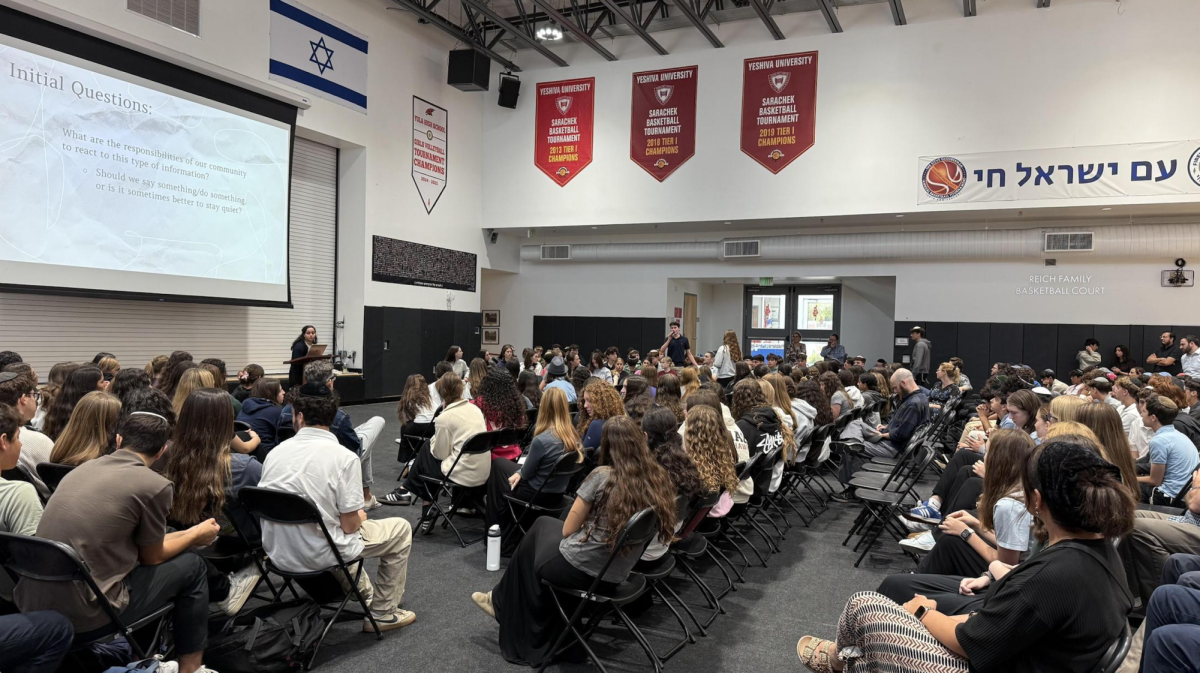
Israel Defense Forces Commander Amit Moaz, who was injured in the 2nd Lebanon war in 2006, and Shimon Cohen, an IDF soldier who was injured in the Oct. 7th war, shared their stories with the Shalhevet community at a special presentation in October.
After the program, which featured a video retelling of their injuries and recovery as well as audience questions, the soldiers also sat for an interview with the Boiling Point.
“The tank behind mine was hit by a missile,” said Commander Moaz during the video. “Everything went black. It was burning hot. I felt like I was in hell.”
When he woke up doctors informed him that he had a hole in his left lung, and if he had been found only a few minutes later, he would have died.
“What happened is irreversible. All I can do is look ahead,” said Commander Moaz.
Mr. Cohen remembers learning about the Oct. 7 attacks at 7:30 am that morning while davening, when the Rabbi stopped praying and banged on the podium announcing rocket attacks in the south.
“His knock still echoes in my head every time I think about it,” said Mr. Cohen in the video.
Mr. Cohen was injured during his service in Gaza in an explosion when a mortar shell fell on him and his paratrooper reserve brigade. When he woke up, he said in the video, he found out he had [bullet] “holes in his legs.”
Rehabilitation is ongoing, but he is grateful.
“God gave me a gift […] so my duty is to try,” Mr. Cohen said. “I don’t always succeed, but try to celebrate this gift everyday.”
In the video and in the interview that followed, Mr. Cohen said that he entered a girls school in Gaza, expecting to see books on typical subjects, such as math. What he found instead, among many weapons, was a book from Hamas that taught the terrorists how to kill.
He then realized the terrorists had made their base in the school, knowing that the IDF wouldn’t attack a school “and they [Hamas terrorists] would not be harmed.”
Seeing the school and all the other terrible things in Gaza reminded him why he fought, Mr. Cohen said.
During their presentation and the interview, both Commander Moaz and Mr. Cohen said that while the army offered both of them the option of not returning to the reserves due to their injuries, they decided to anyway.
Rosh Beit Midrash and 12th Grade Dean Rabbi Ari Schwarzberg asked what they do when there are people who don’t feel the same way as they do about going into reserves.
“If there’s something we have learned from October 7th it’s that we feel very strongly about Israel and we will be there when we need to be,” Mr. Cohen said. “Everyone is different. We fight for everyone, even people who don’t want to be [in the reserves] like us.”
Freshman Ayala Dozetas asked the soldiers about their motivation.
“What makes you wake up in the morning and continue to fight even though you are injured?” Ayala asked.
“Fighting itself can be hard,” Commander Moaz said. “When you are away in the army and leaving your family it’s hard. But when you know why, it’s easier.”
Mr. Cohen had a slightly different answer.
“As a soldier I understand that if I will not do it, no one will do it. This is my story,” he said.