This piece is an updated and expanded version of “The English Department weighs in,” from the “Let’s talk about it: Artificial intelligence” story, which appeared in the May 2026 print edition of the Boiling Point alongside two opinion pieces on the subject, “We need to reign in educators’ use of A.I” and “Drawing the lines between students’ use and abuse of A.I..”
___
Students are increasingly turning to artificial intelligence tools like ChatGPT to complete homework, study for tests and conduct research on various topics. As these tools become more common in classrooms, schools are asking whether they should restrict their use or integrate them, especially as tools improve and it becomes increasingly difficult to distinguish artificial writing from human.
At Shalhevet, the shift is already visible, with students reporting the use of A.I. to summarize readings, generate ideas and even draft essays, an impact that is hard to ignore, said senior Gabe Mittman.
“It is honestly changing everything,” Gabe said. “If you know how to use it right, it can save you hours. But it also makes it really easy to just not think.”
A recent national survey by the Pew Research Center found that about 54% of U.S. teens use A.I. tools to help with schoolwork, indicating that technology is already in use as students learn and complete assignments, which makes it increasingly difficult for schools to limit or ignore its role in education.
According to Principal Daniel Weslow, Shalhevet’s overall approach is not simply to ban A.I., but to help teachers and students understand how to use it responsibly.
“We have to lean into it and embrace it,” Mr. Weslow said. “This new chapter in education can be a powerful tool for teachers and students. It is something we should not shy away from, but we also have to educate students on how to use it appropriately while still being authentic to the curriculum.”
Mr. Weslow said the goal is to balance traditional academic skills with new forms of learning: teachers still need to help students build core skills in their subjects, but also recognize that A.I. is becoming part of how students learn.
Teachers are noticing the same trend, often with mixed reactions.
Rabbi Gabriel Falk, Director of Torat Shalhevet, explains that while the technology can support learning, it also raises concerns about academic integrity.
“If a student relies on A.I. to replace their own thinking, then the assignment loses its purpose,” Rabbi Falk said. “But if it helps them understand a concept more clearly, then it can be valuable.”
English teachers have begun incorporating AI into their classrooms rather than banning it altogether.
Mr. Dylan Ross, who teaches various English classes including English Composition and film literature, said A.I. makes him deeply concerned for the future of his students.
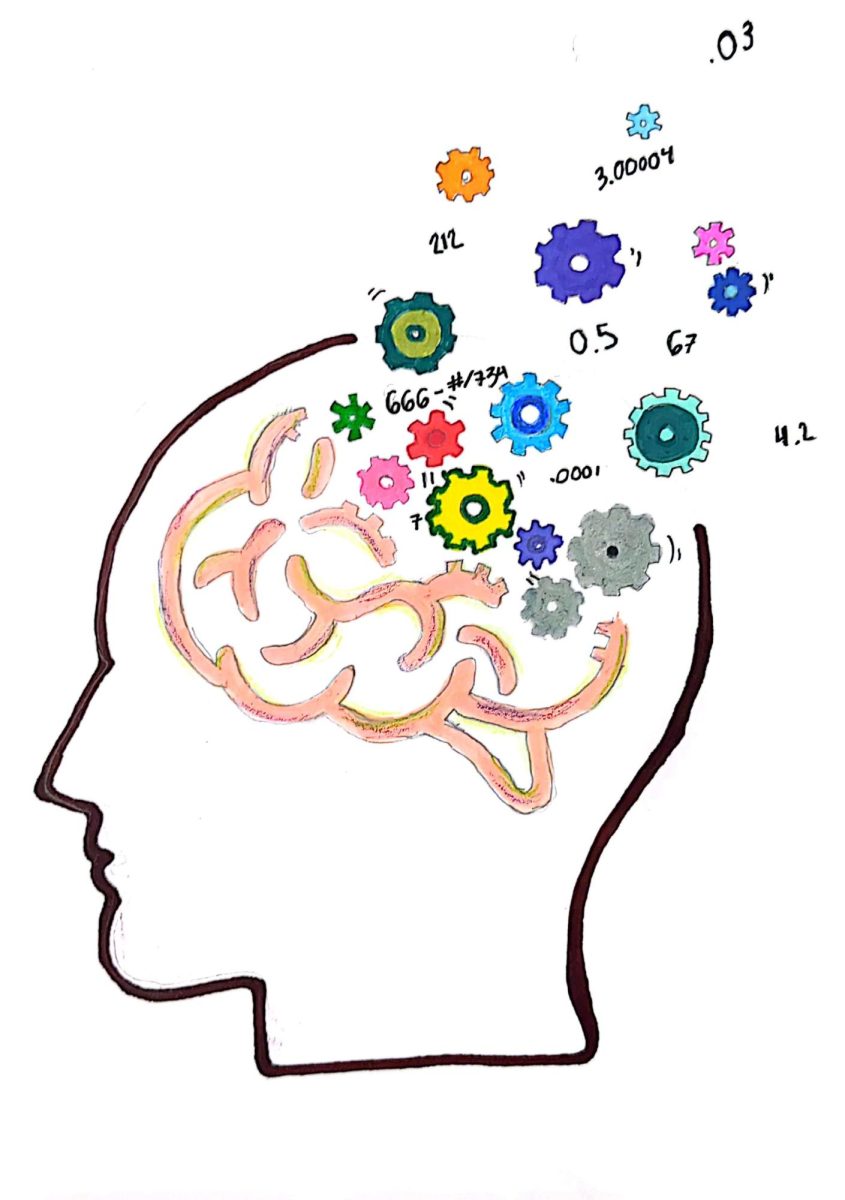
“We are losing the ability to articulate our thoughts independently,” he said, adding that people are “offloading their cognitive responsibilities to a machine.”
“It’s causing their brain muscle to atrophy,” Mr. Ross explained. “People are getting dumber.”
His goal is to “teach students how to use it ethically,” he said, saying A.I. is “a tool they can turn to…to support their thinking.”
Mr. Brian Forrester, who teaches 10th grade American Literature and 11th grade British Literature, views A.I. as a positive tool, and even requires the use of A.I.
“We use A.I. on every writing assignment we do,” he said “A.I. is a tool, right? And there are bad ways to use it and good ways to use it.”
Many teachers, including Mr. Forrester, have introduced the use of programs like Brisk Boost and School AI.
“[These sites are] generally using chatbots that I designed myself,” Mr. Forrester said. He shared the example of School AI, which allows students to receive regulated feedback and enables him to monitor chats between his students and the bots.
Ms. Michelle Crincoli, who teaches Banned Books and other classes, said that English teachers have a duty to combat A.I. She believes that literature and creativity can help us separate from our devices and re-center.
“The word ‘human’ is in humanities,” Ms. Crincoli said, “we need it more than ever.”
“We are always going to evolve, we are always going to come up with new ways to think and interact with written texts,” Mr. Forrester said, “and new crazy ways of thinking and creating and expressing ourselves are going to come out of it.”
As more schools across the country reconsider their policies on A.I. use, some have attempted bans and others are beginning to incorporate A.I. into assignments, asking students to show their process or reflect on how they used the tools.
At Shalhevet, there is no single rule that applies across all classes, which leaves students and teachers to navigate the issue on their own. This lack of consistency can create confusion over differing expectations across classrooms. In-school tensions also reflect a broader conflict in education, with A.I. offering efficiency and access to information while challenging more traditional ideas of effort and originality.
Junior Joseph W. Lax said that the line between work created by AI and original ideas is not always clearly differentiated.
“Sometimes I use it to check my understanding, like asking it to explain something in a simpler way,” Joseph said. “But I also know people who just copy what it gives them. It depends on the person.”
Many agree that the technology is not going away.
“You can try to ban it, but people are still going to use it,” Gabe said. “It is probably better to teach students how to use it the right way instead of pretending it does not exist.”