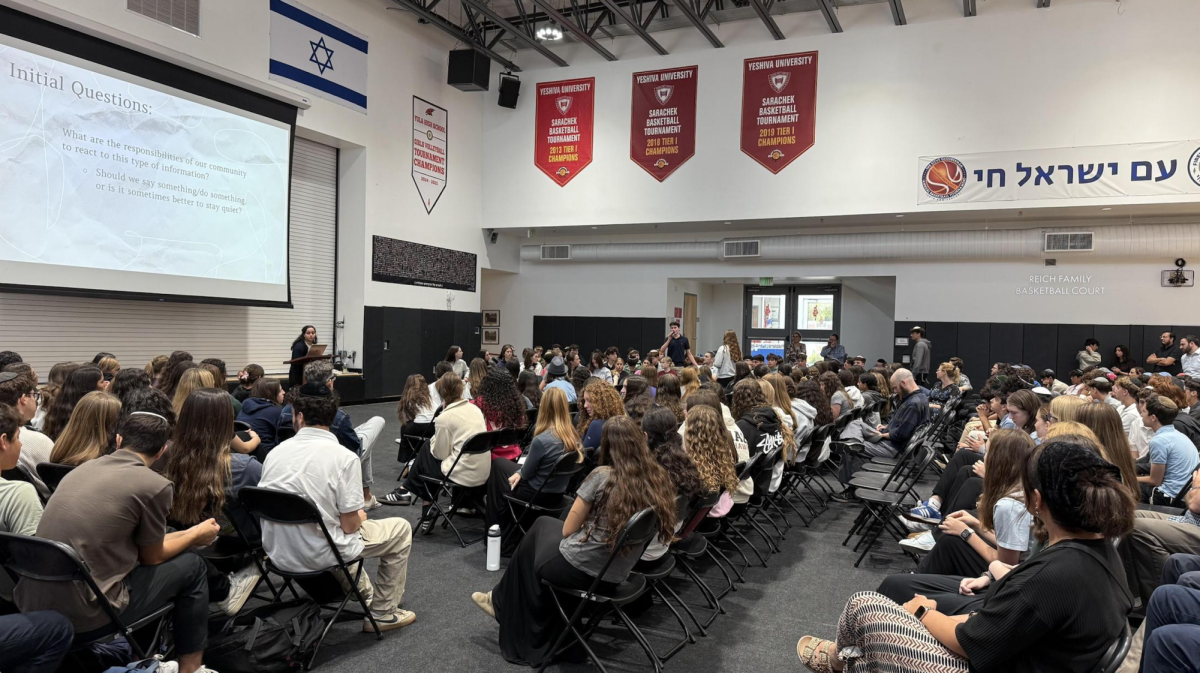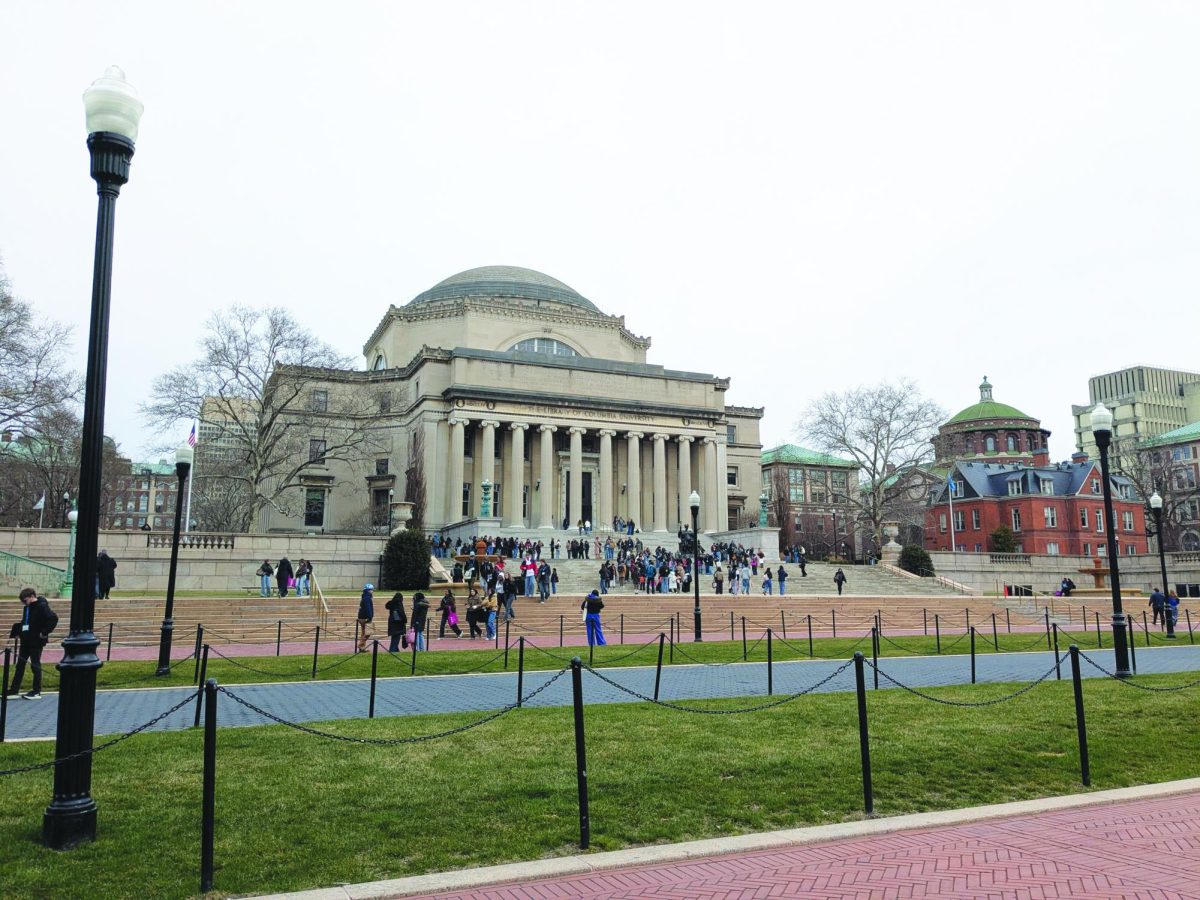
For most of my life, I have been surrounded by Judaism and flourishing Jewish identity. It only took a few hours on campus for the Columbia Scholastic Press Association Convention (CSPA) for me to realize that there was no longer a blanket of protection surrounding me.
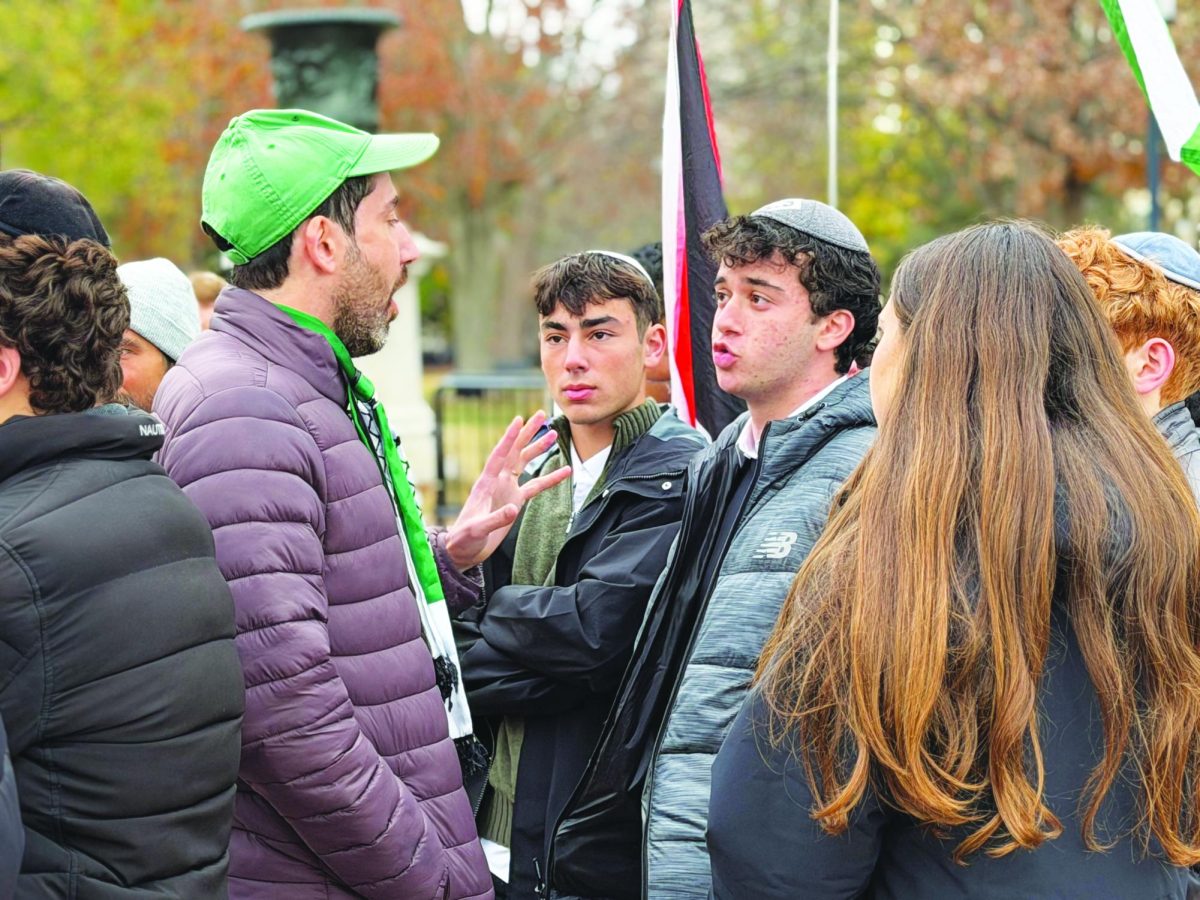
Having arrived early that morning for CSPA, an assembly of student journalists from across the country, another Shalhevet student and I were waiting for the rest of our group at the Columbia University campus entrance, when a man walking a small dog came through the gate and began shouting. I wasn’t paying attention to what he was saying until I heard the word ‘Israel’ and realized he was shouting “Death for Israel! Death for Israel!” The man passed us, and eventually a security guard went over to him to stop his yelling.
I didn’t verbally reveal my Jewish identity, but I still think that I looked like a religious Jew, wearing a knee-length skirt while the rest of Columbia’s campus was flooded with students in jeans or sweatpants. I might not have been identifiable to him as Jewish, but I was still scared.
Later that day, I was in a three-hour writing workshop where students were pitching stories based on controversial topics seen in the news. One student began talking about anti-semitism he has seen in his school compared to anti-Zionism, crafting his pitch to seem more opposed to the Jewish students. I sensed an agenda, and I could tell most people were resonating with what he was saying on some level. At this point, I realized I might be the only Jewish student in the class and decided that, when I spoke, I would not mention anything about being Jewish. But while the lecturer was waiting for someone new to speak, the same student who pitched his anti-semitism vs. anti-Zionism idea made a second pitch, about the Jewish bullying he had seen in school. His plan was to specifically interview the bullies, to see their point of view and how they were justifying their actions toward the Jewish students.
The way he was framing his argument combined with the fact that I needed a pitch idea made me raise my hand. I remember feeling nervous, but not scared. I said that I was Jewish, and that I felt like it was equally important, if not more so, to interview the bullied students. I argued that the student should reframe his pitch to include Jewish voices. I said that as a Jewish student, I haven’t felt the safest at Columbia, and that I experienced a lot of nervousness coming to the campus.
When I finished talking, the room was dead quiet as the lecturer paused to consider my criticisms. Eventually, she said that it was a strong idea, and we moved on from the subject. At that moment, I knew that the lecturer was modeling a journalistic approach, being unbiased and impartial.
There were moments during the experience when I could easily display my Judaism: at our hotel on the Upper West Side, I felt comfortable davening in a small group and wearing skirts. During our visit to the Kraft Center Hillel at Columbia and Barnard, I felt most willing to be affiliated with Judaism. On the subway, we were in a group, so it felt okay to appear visibly Jewish. In those locations, the last thing on my mind was that I am, and might be identified as, Jewish, and in others it was the only thing I could think of.
Some people would say that I didn’t need to shrink my Jewish identity when faced with a potential threat, that in contrast, I should have stood up to the man at Columbia yelling “death for Israel!” But I went to the campus with the knowledge that since Oct. 7, 2023, Columbia has become more unsafe for Jewish students. So, when given the option to share or hide my religion at Columbia, knowing there could be a threat to my wellbeing or endanger the friend I was standing with, I decided to stay safe in the moment and write about the experience afterwards.
Later, I thought about the two moments of conflict: I was comfortable showing I was Jewish when the biggest risk was verbal, in the writing workshop, but on campus, with threats towards Israel, I kept my distance to stay safe.
Having grown up in the Pico-Robertson area, I realized it was easy to walk outside and be immersed in Jewish culture; at Shalhevet, a dome of Jewish values surrounds daily activities, shaping my initial reality on Jewish identity. Visiting Columbia changed the framework for how I see my Jewish identity, making it a lot less linear and much more abstract.
When I am surrounded by Jewish culture, I don’t give it conscious thought; but in certain moments in non-Jewish environments, it’s my only point of focus. Encountering the man yelling “death to Israel” and realizing I might have been the only person supporting Judaism in my writing workshop, I better understood the bigger challenge of being outwardly Jewish in non-Jewish spaces and that suppressing identity when things feel uneasy is hard. I emerged from the experience newly aware and grateful for the shields of Judaism covering my day-to-day life.