I used to think the rules about A.I. in school were pretty clear. Don’t use it. Period. But as I’ve moved through Shalhevet, things seem to be changing.
Last year, in my 10th grade American Literature class, we learned how to use tools like ChatGPT, Grammarly and others to improve our essays — not to cheat, but to work with them. Our class policy says A.I. can be considered misuse when it replaces a student’s original thinking or writing. But we used A.I. tools to ask for feedback on drafts, get suggestions on how to improve arguments, or to better understand what we were trying to say. Then we’d revise, making our own changes instead of just accepting all the suggestions. The thinking and writing were still mine, which is what the policy is trying to protect. It wasn’t about letting A.I. do the work. It was about learning how to think alongside A.I..
In 11th grade, using A.I. for schoolwork is not allowed. Period. So which is it? Right now, the line between using A.I. as a tool and using it dishonestly still feels unclear. For me, the difference comes down to one question: who’s doing the thinking?
Right now, our policy at Shalhevet focuses heavily on detection and punishment. It explains that assignments are checked using A.I.-assisted tools that compare students’ work to databases and other submissions. That makes sense for clear cases, like if a student submits a full essay generated by A.I. — the work isn’t original and clearly violates the policy. But in determining “improper use of external sources” and “unethical use of A.I.,” things get less clear. If I use A.I. to brainstorm ideas or help me understand how to structure an argument, I’m still doing the thinking and writing myself. That doesn’t feel like cheating, but it could still fall into a grey area under the current rules.
The policy also warns against “unauthorized collaboration,” which makes sense when students work together in ways they’re not supposed to. But A.I. complicates that definition. Is using a tool to suggest edits or improve clarity that different from asking a friend or using something like Grammarly? The policy doesn’t clearly explain where that line is.
The ethics should come down to one core idea: A.I. can support your thinking, but shouldn’t replace it. Using A.I. to get feedback, brainstorm or better understand something should be acceptable, as long as the ideas, structure and writing are yours, and you’re still doing the real work.
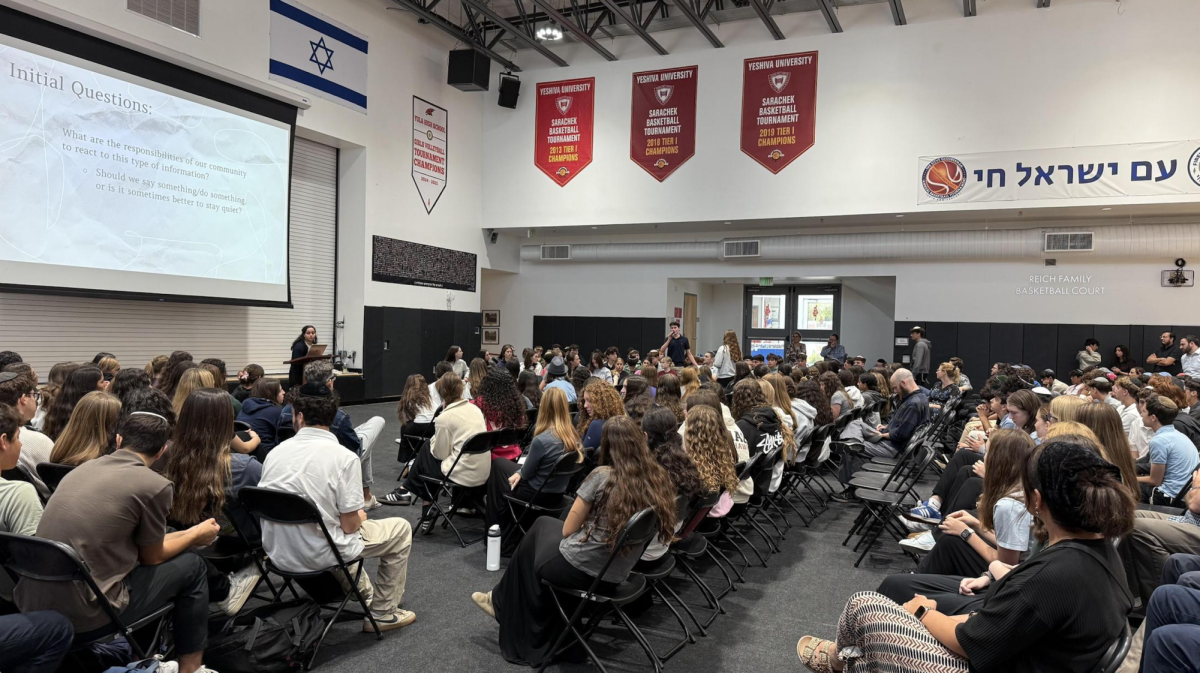
The real issue is not that students are using A.I., but that we’ve been left to figure out the ethics by ourselves. We need a clearer path forward: this could mean updating the policy to clearly distinguish between acceptable and unacceptable uses, giving real examples of each or clearer guidelines in each class or a dedicated unit on A.I. ethics. But the goal should be the same: students shouldn’t have to guess where the line is: they should be taught where it is.
A.I. is becoming more accessible and more integrated into everyday life. Treating A.I. as something to avoid rather than something to understand doesn’t prepare us for anything — it leaves us guessing. As faculty and staff shape the policy for 2026-27, they should move beyond restriction and focus on clarity: define the boundaries, give real examples and teach students how to use A.I. tools in an ethical and responsible way.